
Census data shows that the demographics of Plymouth and Plymouth Township are changing. As of 2024 reports, 17.3 percent of the Plymouth population was 65 years or older, an increase of nearly 2 percent compared to 2020 data, which reported 15.8 percent [1, 2]. In Plymouth Township, nearly 33 percent of the population was 65 or older as of 2024, compared to 24.2 percent in 2020 [3, 4].
Seniors have been known to regularly visit the library as they retire, with many of them attending programs, events, book clubs, or becoming volunteers to give back to the community. Because of this, Adult Services Librarian Kathryn Bergeron has made it one of her goals to introduce more daytime programming for seniors to attend, introduce new collections that fit their needs and interests, and stress the importance of connection among generations of library patrons.
The library offers many opportunities for seniors to get involved, including programming to fit their interests and needs. When it came to creating new senior programs and events, Kathryn shared her thought process, “I decided to break down programs into three themes: intellectual, practical, and health-related.” These types can be found in recent and upcoming programs on our Event Calendar, respectively: In the Garden with the DIA, Fake News and Misinformation, and Fall Management and Prevention for those with low vision.
She added, “We’re trying to hit people at different stages of their life who need different things, even if we’re putting it under the ‘senior’ umbrella, different people have different needs.” Although some of these events are specifically marketed toward seniors, it’s not a one-size-fits-all category, “I call it ‘senior programming’, but none of this is limited to seniors.”
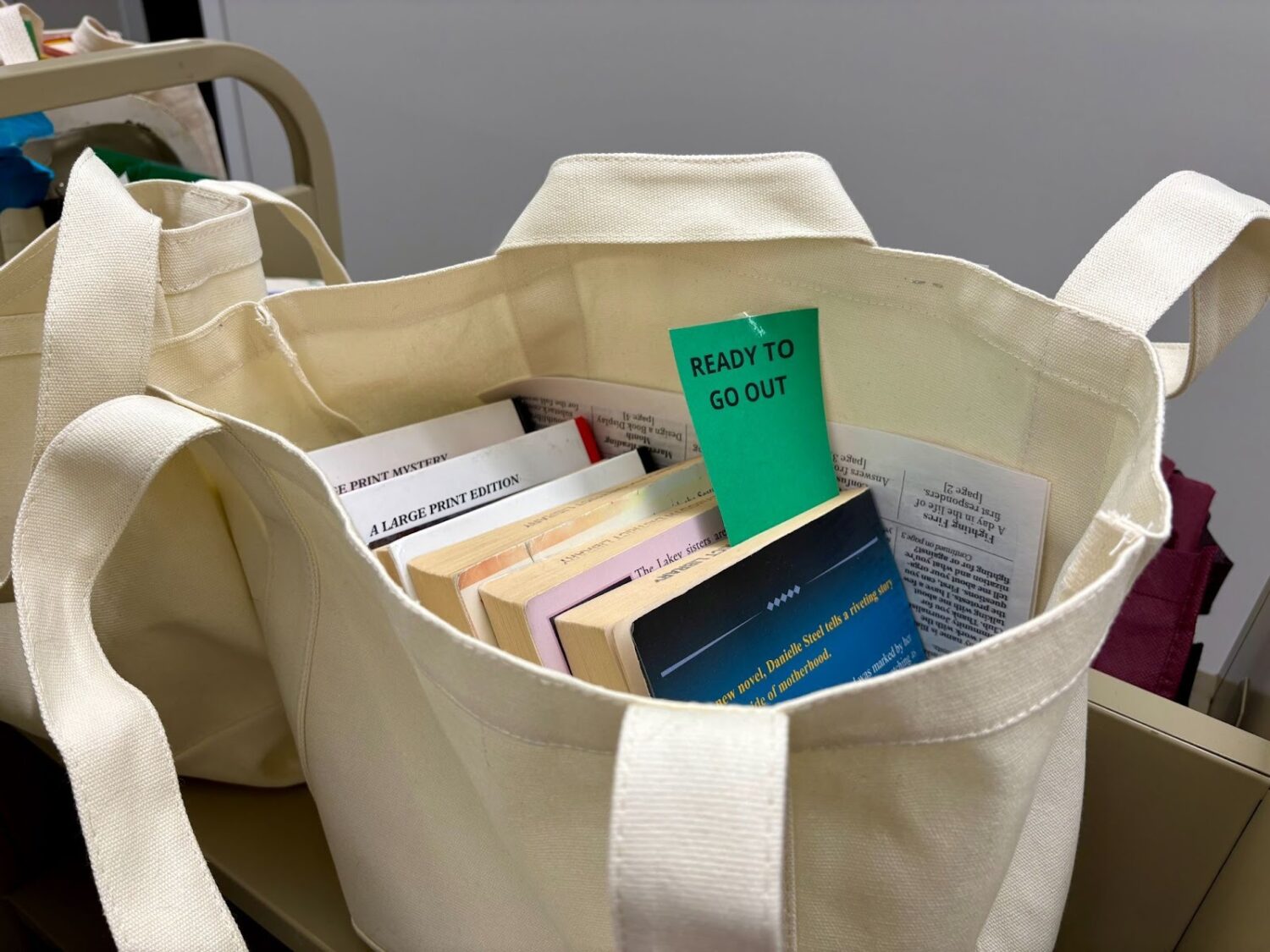
An example of one of the library’s Homebound totes, with books ready to be delivered to a patron.
One of the library’s more unique offerings is the Homebound Program, an effort that began over 20 years ago, involves volunteers hand-delivering books to those who cannot make it to the library themselves. Currently, the library has seven regular homebound patrons who receive books monthly. “You can have someone just drop off books and leave, or you can have someone visit with you while they drop off books,” Kathryn added, “Being able to create that connection is a valuable part of what we do.”
Additionally, we recently launched Project Pen Pal, an opportunity for children to write letters and receive them back from our homebound patrons. The goal is to create meaningful connections that span generations.
Kathryn stressed the importance of widening this category and opening the doors for other groups to get involved. For example, the Homebound Program may benefit aging patrons who have trouble driving, but it could also benefit someone with a temporary ailment or a new parent who has just welcomed a child, “We want to honor people of all ages, wherever they’re at.”
One of the newest additions to our collection is a space for Memory Kits, located along the back wall of our Main Level next to the Book Club Kits. The library determined that memory kits were an area where we could increase accessibility and connection among patrons, specifically caregivers and those dealing with memory loss.
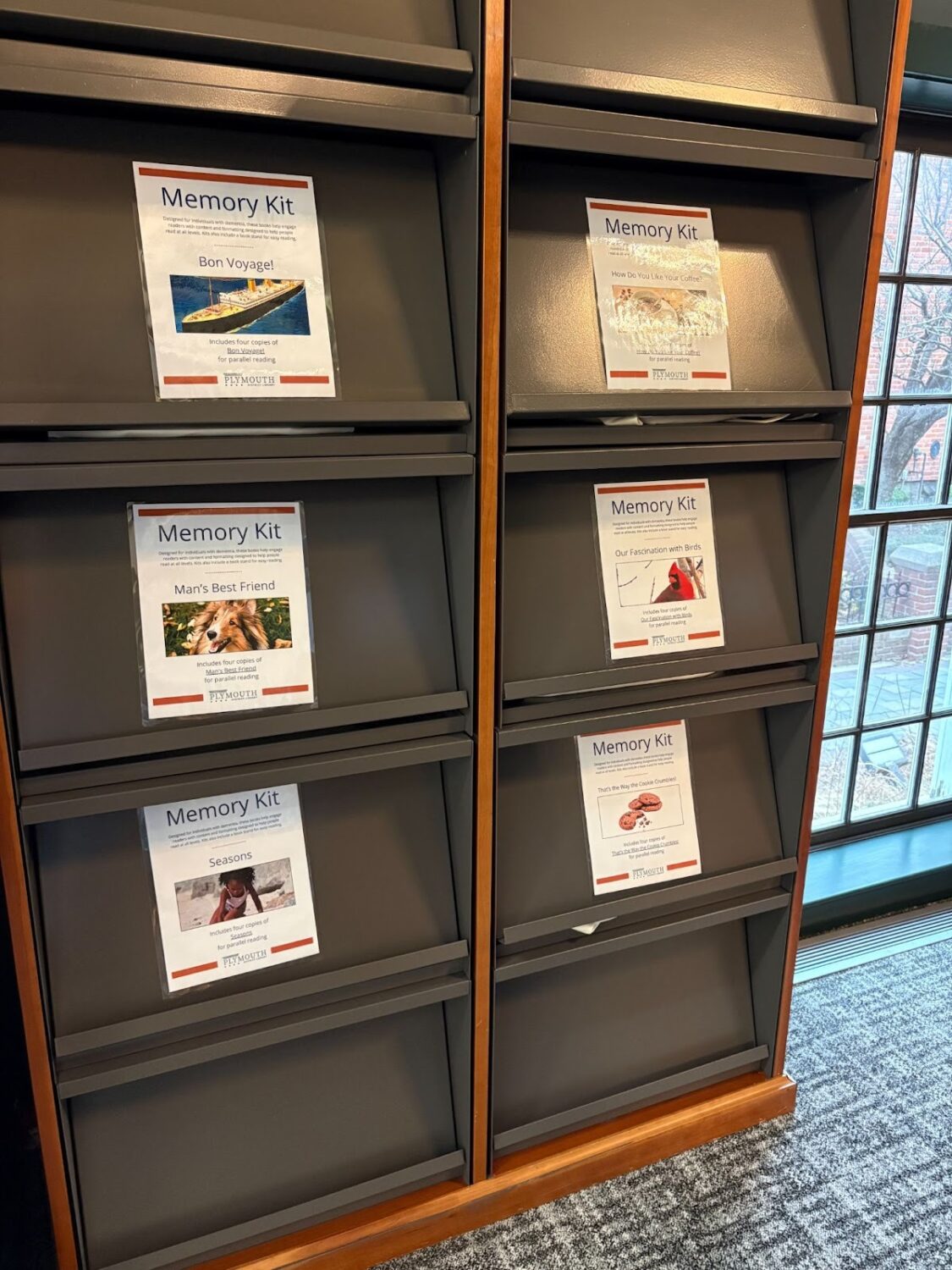
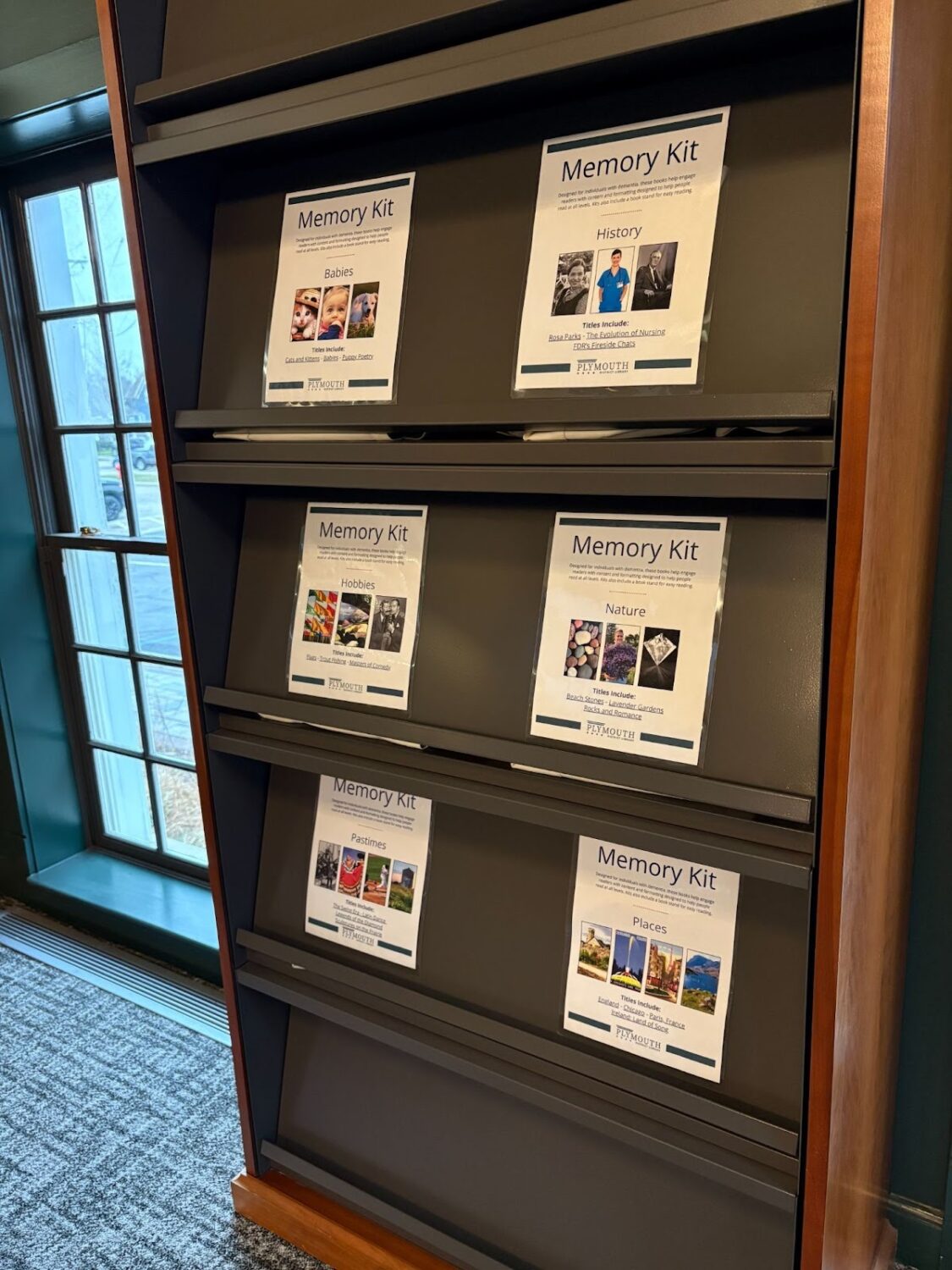
Memory kits located on the main level at Plymouth District Library.
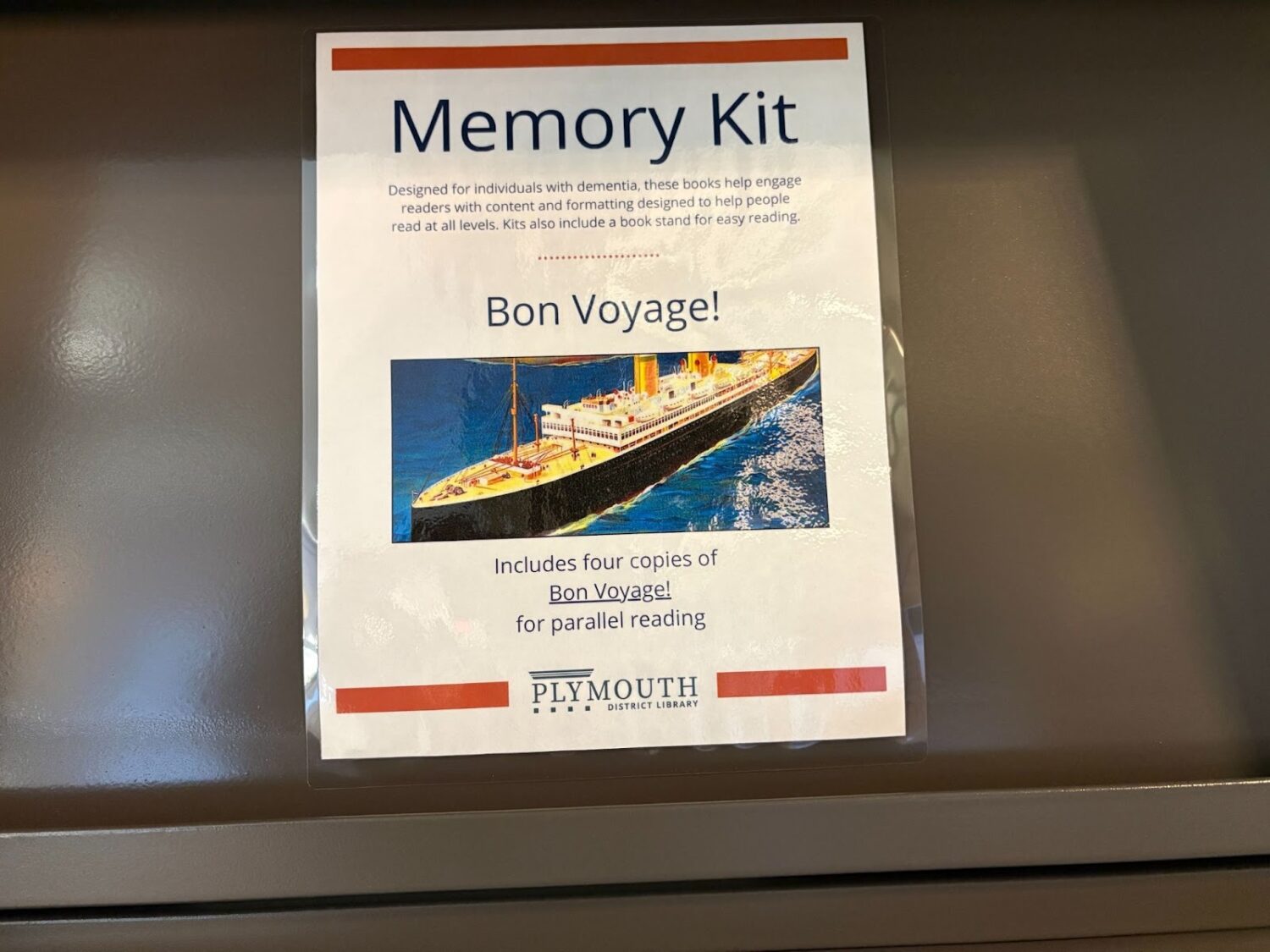
Close-up of Memory Kit, including four copies of “Bon Voyage!” to promote parallel reading.
“People hold on to memories a little bit longer,” Kathryn said, specifying that older memories typically stay with people the longest. Because of that, memory kits include subjects like nature, animals, history, or hobbies, hopefully evoking memories of childhood, youth, or general interest from the reader. Each book in the kits is also picture-heavy, to avoid overwhelming readers who might be intimidated by large amounts of text.
One of the library’s homebound patrons has been a guiding force in the process of creating these memory kits. With each book delivery, the patron has become more interested and excited in the topics to read about and explore, “Seeing [him] engage in this way has been a great motivator for me,” Kathryn said.
Kathryn shared that the goal of the memory kits is to foster connection between people and their caregivers, making the activity not about the content itself but collaborative reading. She shared, “An important part of this collection is building community,” Adding that the goal is for the caregiver to bring home the books and say, “Hey, let’s read a book together.”
Kathryn continued, “Oftentimes, people try to fit them in one mold,” explaining that memory loss and cognitive ability vary drastically from person to person. “They’re individuals with different things that make them excited, and different needs. We want to honor that.”
Honoring these needs has expanded to another program, the Story Share Cafe. In February, the library hosted the first iteration of this event and found the conversation engaging and thoughtful among attendees. The goal of this experience was for individuals to get together and share stories they had of Detroit as a child.
The next meet-up will focus on stories that patrons have about their gardens growing up. Kathryn added that while seniors are the target audience for something like this, there’s no restriction saying that a child can’t attend and share their own story about the garden they’re creating right now, “They can share something meaningful in community where they can just talk to each other and share experiences.”
After all, “That’s what the library is here for,” she added, “To foster connections amongst people.”
Sources
- U.S. Census Bureau, “Age and Sex,” American Community Survey 5-Year Estimates Subject Tables, Table S0101, 2024, https://data.census.gov/table/ACSST5Y2024.S0101?g=160XX00US2665060, accessed on March 31, 2026.
- U.S. Census Bureau, “Age and Sex,” American Community Survey 5-Year Estimates Subject Tables, Table S0101, 2020, https://data.census.gov/table/ACSST5Y2020.S0101?g=160XX00US2665060, accessed March 31, 2026.
- U.S. Census Bureau, “Age and Sex,” American Community Survey 5-Year Estimates Subject Tables, Table S0101, 2024, https://data.census.gov/table/ACSST5Y2024.S0101?q=Plymouth+charter+township,+Michigan, accessed March 31, 2026.
- U.S. Census Bureau, “Age and Sex,” American Community Survey 5-Year Estimates Subject Tables, Table S0101, 2020, https://data.census.gov/table/ACSST5Y2020.S0101?q=Plymouth+charter+township,+Michigan, accessed March 31, 2026.